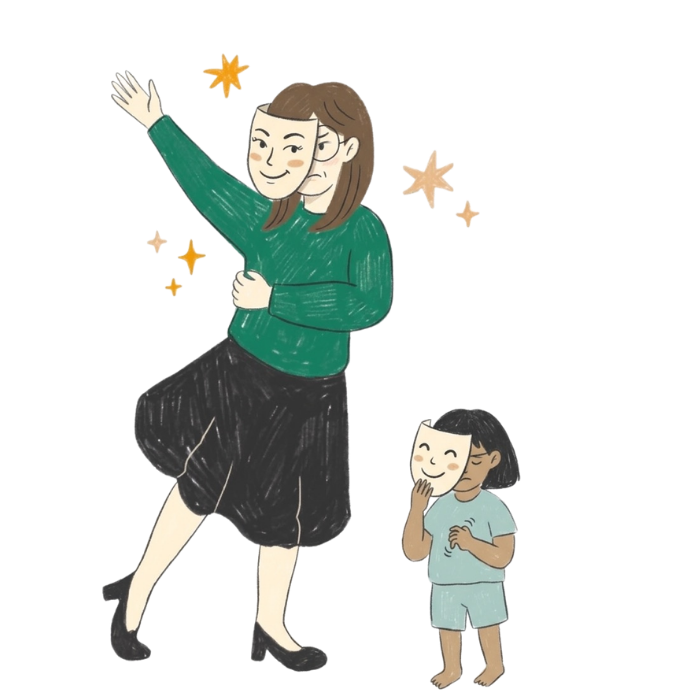
It’s not always loud. It’s not always: “I hate myself.”
Sometimes it sounds more like:
“I don’t know… I just don’t feel good about myself.”
“Other people seem more… okay than me.”
“I feel off, but I can’t explain why.”
And the confusing part? Your life might look completely fine from the outside.
You show up.
You work.
You care about people.
You handle your responsibilities.
But internally… something doesn’t sit right.
When You Can’t Quite Name What’s Wrong
Many high-functioning people don’t walk around thinking: “I dislike myself.”
Instead, it’s more subtle. More internal. Harder to explain.
It might feel like:
A constant sense of being “not quite right”
Feeling behind, even when you’re doing well
Questioning yourself after simple interactions
Overthinking things you said hours ago
Comparing yourself without meaning to
Feeling exposed, even when nothing is wrong
There’s no clear reason. But there’s a consistent feeling: “Something about me just isn’t… good.”
This Is What Internalized Shame Feels Like
Internalized shame doesn’t always announce itself. It embeds itself quietly into how you experience your life. It can feel like:
-
You don’t fully relax into who you are. Instead, you:
adjust
read the room
say the “right” thing
monitor how you’re coming across
Not because you’re fake— but because somewhere along the way, it stopped feeling safe to just be.
-
Even when things are going well, it doesn’t fully land. You might:
achieve something and quickly move on
minimize your strengths
feel like others are more deserving
There’s a quiet disconnect between: what is true about you and what you actually feel about yourself.
-
When someone says something kind, you might:
deflect it
joke it away
internally disagree
It’s not that you don’t hear it. It’s that it doesn’t feel believable.
-
You notice:
what you did wrong
what you could’ve done better
how you might have been perceived
Even in neutral situations, your mind finds a way to turn inward critically.
-
You hesitate to:
ask for help
share how you’re really doing
take up space emotionally
Because there’s an underlying belief: “I don’t want to be too much for people.”
-
This is one of the hardest parts to articulate.
It can feel like:
you don’t fully know who you are
you adapt depending on who you’re with
you feel more “yourself” alone—but also more critical
There’s a subtle sense of: “I don’t feel at home within myself.”
Why This Is So Hard to Recognize
Because nothing looks obviously wrong. There’s no major breakdown. No clear crisis.
Just a quiet, ongoing experience of:
self-doubt
internal pressure
emotional disconnection
And because you’re functioning…You might tell yourself:
“I shouldn’t feel this way.”
“Other people have it worse.”
Which only deepens the shame.
Where This Comes From
These feelings don’t come out of nowhere. They are often formed in environments where:
you had to be a certain way to feel accepted
your emotions weren’t fully understood
you learned to adjust instead of express
parts of you were overlooked or corrected
Over time, you didn’t just adapt your behavior— you adapted how you saw yourself.
It’s Not That You Hate Yourself—It’s That You Learned To Relate to Yourself This Way
This matters. Because if something is learned… it can also be unlearned.
Not through force. Not through pressure. But through:
awareness
safe relationships
new experiences of being known and accepted
A Gentle Question to Sit With
These feelings didn’t come out of nowhere—they were formed in moments where something in you needed care, understanding, or protection. So get curious and ask yourself the right questions.
Not: “What’s wrong with me?”
But: “When did I start feeling this way about myself?”
You’re Not the Only One Who Feels This Way
If you’ve ever thought: “I don’t like myself… but I don’t know why.”
You’re not alone.
This is a deeply human experience—especially for people who:
are thoughtful
aware
and carry more internally than others can see
And There Is a Way Forward
You don’t have to keep living disconnected from yourself. You don’t have to keep performing, overthinking, or quietly carrying this. Healing doesn’t start with becoming someone entirely new through effort or pressure. Because if you’ve been trying to fix yourself for a long time…you already know how exhausting that can be. There is another way.

In the Christian faith, there is this idea of dying to yourself—but not in the way shame often distorts it.
Not:
“Who you are is wrong, so you need to erase yourself.”
But:
“The version of you shaped by shame, pressure, and woundedness is not the truest you.”
Dying to yourself is not about becoming less of who you are. It’s about releasing the false identities you were never meant to carry.
The constant self-criticism.
The pressure to be enough.
The belief that something is fundamentally wrong with you.
Jesus speaks to this kind of burden directly:
“Come to me, all who are weary and burdened, and I will give you rest.” (Matthew 11:28)
Not more pressure.
Not more striving.
Rest.
And as you begin to let go of the weight you were never meant to carry, something else becomes possible:
“Do not conform to the pattern of this world, but be transformed by the renewing of your mind.” (Romans 12:2)
This renewal isn’t forced. It happens slowly, relationally—over time. Scripture also reminds us:
“Therefore, if anyone is in Christ, the new creation has come: The old has gone, the new is here.” (2 Corinthians 5:17)
Not erased.
Not replaced.
But restored.
Which means healing doesn’t begin with trying harder.
It begins with slowly experiencing:
What it feels like to be yourself… and not feel wrong for it— because your identity is no longer rooted in shame,
but in being deeply known and loved by God.
Gentle Invitation
If this resonates with you, you’re not alone—and this is often where therapy begins.
Not with fixing you, but with gently understanding your story… how you came to feel this way, and creating space for something new to take shape. A space where you don’t have to perform, hide, or carry this on your own anymore..
Need immediate support?
If you’re in distress, you don’t have to navigate it alone.
Call or text 988 (Suicide & Crisis Lifeline — available 24/7 in the U.S.)
Or visit: https://988lifeline.org