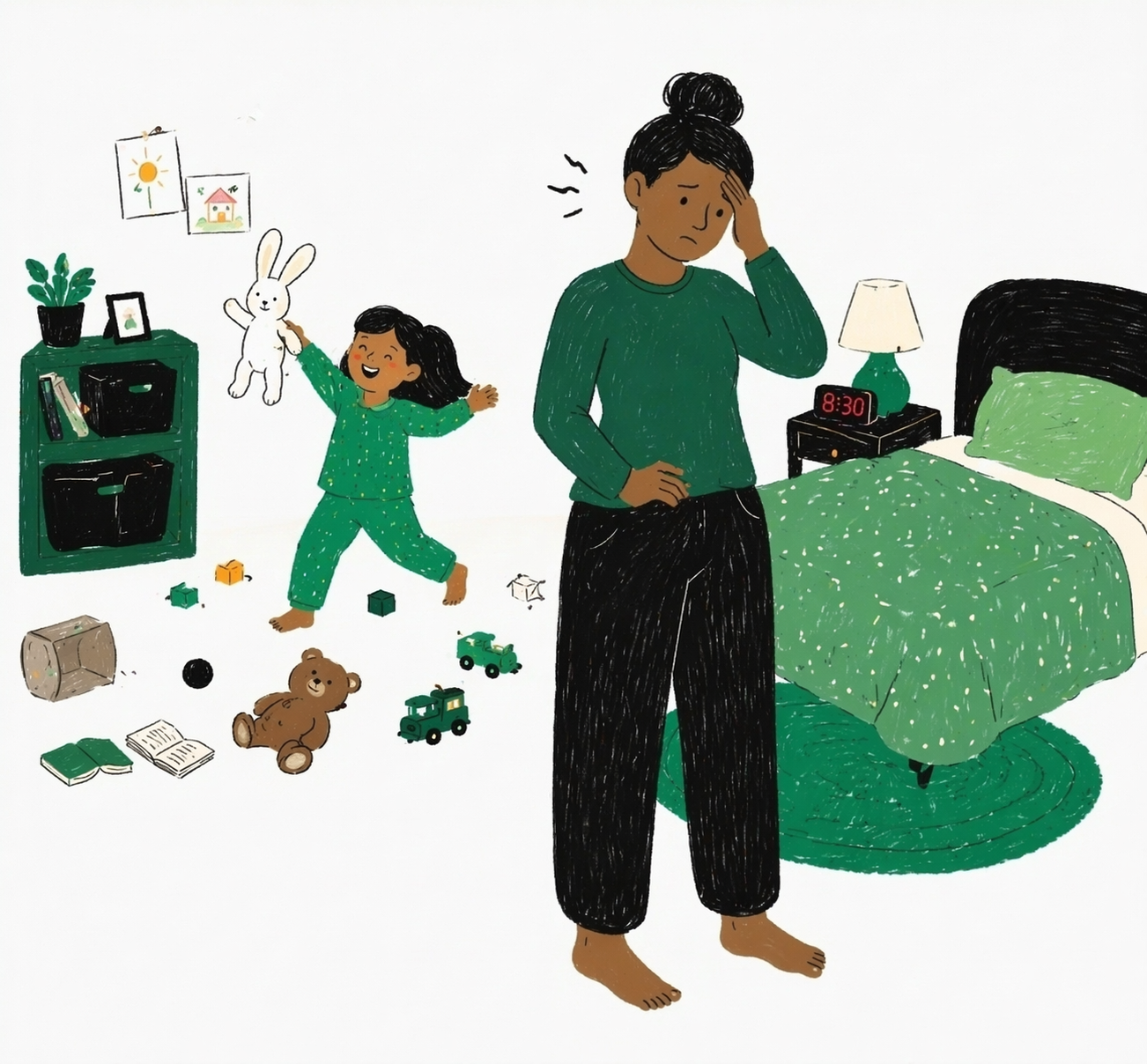
You’ve said it three times already.
“Hey, it’s time for bed.”
“Go brush your teeth.”
“Let’s get your pajamas on.”
Nothing. Or maybe worse—
A “NO!”
A meltdown.
Running away.
Suddenly everything is a battle.
And somewhere between frustration and exhaustion, the thought hits: “Why is my child not listening?”
If that’s where you are right now, take a breath.
Because what looks like defiance on the surface is often something very different underneath.
It Might Not Be About Listening at All
We tend to assume that when kids don’t listen, they’re:
Being disrespectful
Testing limits
Trying to get their way
And yes—sometimes kids do push boundaries. That’s part of development.
“Not listening” is actually a signal, not a character flaw.
Your child might be:
Overstimulated after a long day
Struggling with a transition (like bedtime)
Feeling disconnected and needing more connection before cooperation
Emotionally overwhelmed and lacking the skills to regulate
So instead of hearing your request their nervous system is already in overdrive.
Behavior Is Communication (Even When It’s Loud)
Let’s go back to something we talked about in the last post: Your child isn’t a problem to fix. They’re a person to be understood.
When a child “isn’t listening,” they might actually be communicating:
“I’m overwhelmed and don’t know how to slow down.”
“I need more connection before I can cooperate.”
“This transition feels too hard for me right now.”
“I don’t feel in control, so I’m pushing back.”
And because kids don’t always have the words for that it comes out as resistance, avoidance, or big emotions.
What This Looks Like in Real Life (Bedtime Edition)
Let’s paint a picture.
It’s the end of the day. You’re tired. Your patience is thinner than it was this morning. You’ve still got things to do after your child goes to bed. You say, “Time for bed.”
Your child:
Ignores you
Starts playing more wildly
Says “I’m not tired!”
Maybe even melts down when you insist
From the outside, it looks like they’re just not listening. But underneath?
Your child might be:
Struggling to transition from play to rest
Seeking connection after being apart all day
Overtired (which actually increases dysregulation)
Picking up on your stress and feeling unsettled
And you? You might be:
Mentally exhausted
Touched out
Feeling pressure to “just get them to bed already”
Now you have two overwhelmed nervous systems trying to get through bedtime.
A Different Approach: The “Pause + Wonder” Skill
This is where we shift everything. Instead of reacting immediately, try this simple practice:

Pause
Before repeating yourself or escalating the situation, take a breath.
Not to ignore the behavior—but to slow the moment down.
Wonder
Ask yourself (silently or out loud):
“What might be going on underneath this?”
“What does my child need right now?”
“What do I need right now?”
This isn’t about getting it perfect. It’s about shifting from control → curiosity.
What This Can Look Like in the Moment
Let’s go back to bedtime. Instead of: “Why aren’t you listening? I said it’s time for bed!”
You might try:
“Hey, I wonder if it’s hard to stop playing right now.”
“Come here for a second—I think we both need a reset.”
“Do you want to hop like a bunny or tiptoe like a ninja to the bathroom?”
Or even just:
Sitting next to them for a moment
Softening your tone
Making eye contact before giving the direction again
Because here’s the truth: Connection often comes before cooperation.
A Gentle Word for the Parents Carrying a Lot
If you’re reading this thinking, “I try, but I still lose my patience sometimes…”
You’re not alone. And you’re not failing.
Parenting—especially when your child has big emotions—is deeply stretching. It exposes your own limits, your own stress, your own need for support. Sometimes the invitation isn’t just to understand your child, but to care for your own overwhelmed heart, too.
God’s grace doesn’t run out at bedtime. It meets you right there—in the mess, in the noise, in the trying again.
When “Not Listening” Keeps Happening
If these moments feel constant. If every transition turns into a battle. If you’re exhausted from trying everything. That’s often a sign that something deeper needs support. For younger children, that support doesn’t come through lectures or reasoning. It comes through play. In play therapy, we help kids:
Work through the emotions underneath the behavior
Build regulation skills in a way their brain understands
Feel safe, seen, and connected
And as that happens? The “not listening” often begins to shift—because the need underneath it is finally being met and your understanding grows.
A Small Step You Can Try Tonight
At your next hard moment, try this:
Instead of asking, “How do I get them to listen?”
Ask, “What might they need right now?”
And just notice what changes.
You Don’t Have to Do This Alone

If you’re feeling stuck in these patterns, you don’t have to keep guessing your way through it. I offer in-person play therapy in Sierra Madre, CA for children (ages 3+) and support for parents who want to better understand what’s really going on beneath behaviors like “not listening.”
This work isn’t about control. It’s about connection. And from that place—real change can happen.
If you’re curious, I’d love to connect and hear your story.
👉 Click here to schedule your free consultation
No pressure. Just possibility.